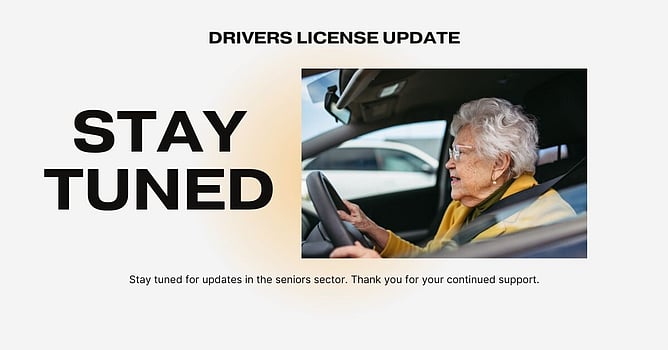
After 2 years of concerted advocacy by Grey Power to NZTA, politicians, and the medical profession, we are delighted to advise that the attached information about the use of cognitive tests has been released for GPs and the public.
The Auckland University review of evidence for the value of cognitive tests in assessing a senior’s ability to drive was crystal clear – “For older people who are considered to be physically and mentally healthy, current evidence does not support the routine use of cognitive assessment as part of fitness to drive assessment.”
The Key Messages for Senior Drivers was agreed at a meeting of NZTA, Ministry of Health, the RNZ College of GPs, and the Office for Seniors on Tuesday.
We trust this is a great relief to many of our members. Please keep us informed if you do encounter GPs still insisting on a mandatory cognitive test with all senior drivers seeking to renew their driving licence.
Hopefully this will bring a fairer system of assessment throughout the country.
Kind regards
David Marshall
National President
Grey Power New Zealand Federation Inc.
Cognitive testing for senior drivers
What senior drivers can expect
• Older drivers can expect to see a shift away from routine screening for cognitive impairment when attending for assessment of fitness to drive.
• It is best to see a health professional from your usual practice, who knows you and your medical history well for your fitness to drive assessment.
• If the general practitioner or nurse practitioner providing your assessment doesn’t know you well, they may screen for cognitive impairment if they don’t have enough information available to be certain there is no impairment.
• If screening identifies cognitive impairment, then there will be further assessment to decide if this affects your driving, this might be an on-road safety test or an occupational therapy driving assessment.
Occupational therapy driving assessment
What health practitioners might discuss with older drivers
• Safe driving depends on many factors – memory, attention, vision, physical abilities, reaction time and overall health. We look at these areas all together, not just one test result.
• Tests of thinking and memory can help spot concerns, but they don’t tell the whole story about your ability to drive safely. We also consider your medical history, vision, physical abilities, and feedback from family or support people.
• If there’s uncertainty about your safety on the road based on the tests we do here at the clinic, an on-road safety test is the best way to check your current driving skills. This gives us the most accurate picture of your driving ability.
• Driving is important for independence. If changes are needed, clinicians will discuss alternative transport options and support you through any transitions. We understand how important driving is for you, and we’ll help you explore other options if needed.
• The decision regarding fitness to drive is a clinical one, bound by statutory responsibilities. Your input and preferences matter in this process. We want to make decisions that are fair and safe.
FAQs for senior drivers
Why is my doctor talking to me about driving?
As we get older, changes in health, vision, and thinking can affect driving safety. Your doctor’s goal is to keep you and others safe on the road while supporting your independence.
Does one test decide if I can keep driving?
No. Driving safely depends on many things such as memory, attention, vision, physical ability, and overall health. We look at all these areas together, not just one test result.
What happens if I do a memory or thinking test?
These tests can help spot concerns, but they don’t tell the whole story about your driving ability. Your doctor will also consider your medical history, vision, physical abilities, and feedback from family or support people.
What if my doctor is unsure about my driving safety?
If there’s any uncertainty, the best way to check is an on-road safety test or occupational therapy driving assessment. This gives the most accurate picture of your current driving skills.
Will I lose my license if I have a health condition?
Not necessarily. Many people with health conditions can still drive safely. Decisions are made based on your overall health and driving ability, not just a diagnosis.
What if I can’t keep driving?
We understand that driving is important for your independence. If changes are needed, your doctor will talk with you about other transport options and support you through any transitions. If you are not fit to drive your health practitioner is legally required to inform NZTA of this in writing. There is information on NZTA’s website about alternatives to driving.
Can I have a say in the decision?
Decisions are made based on your overall health and driving ability. Health practitioners consider information from you, and fitness to drive assessments.